Young Voices Power Uganda’s Energy Transition Dialogue
22 July 2025
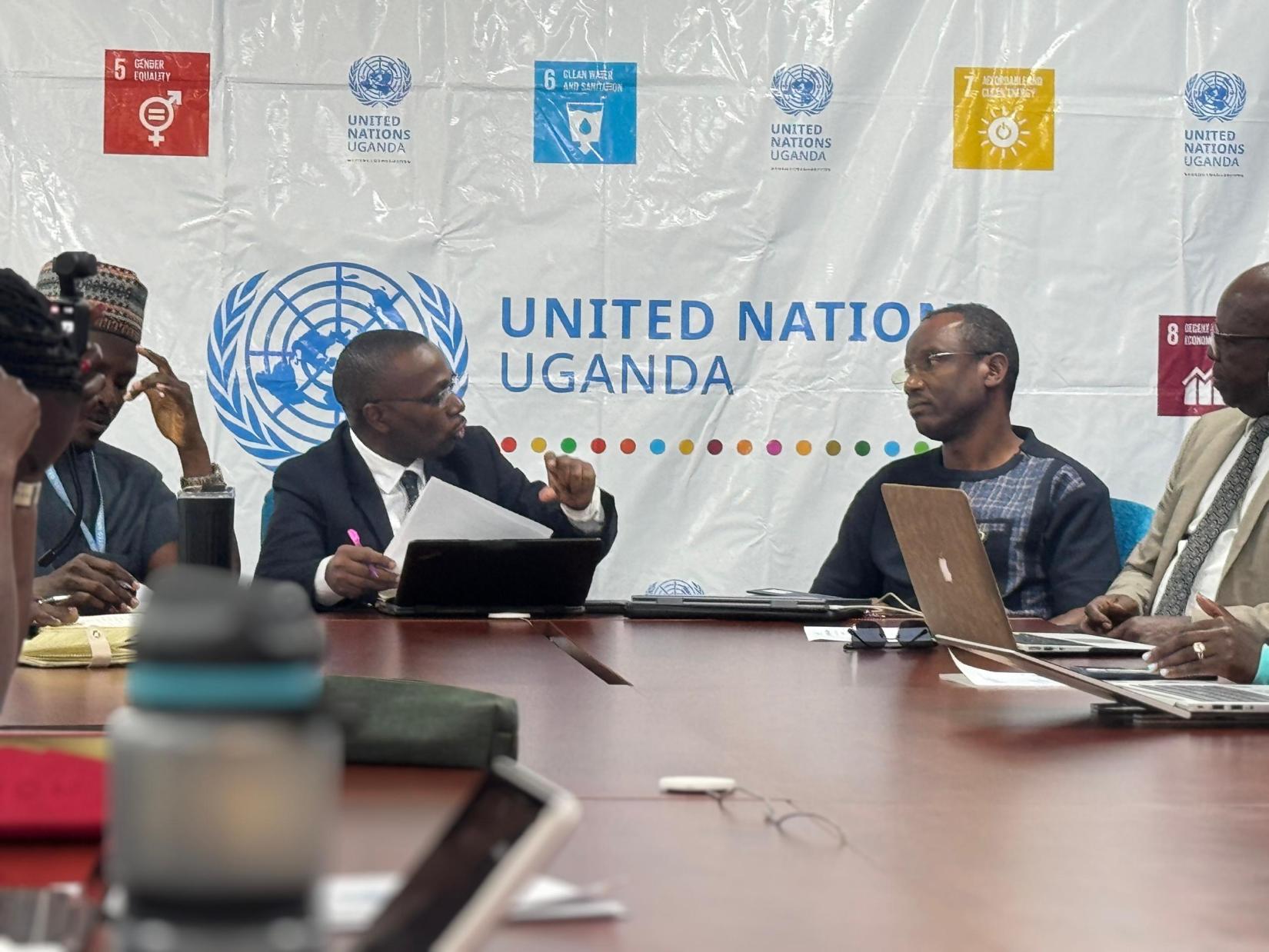
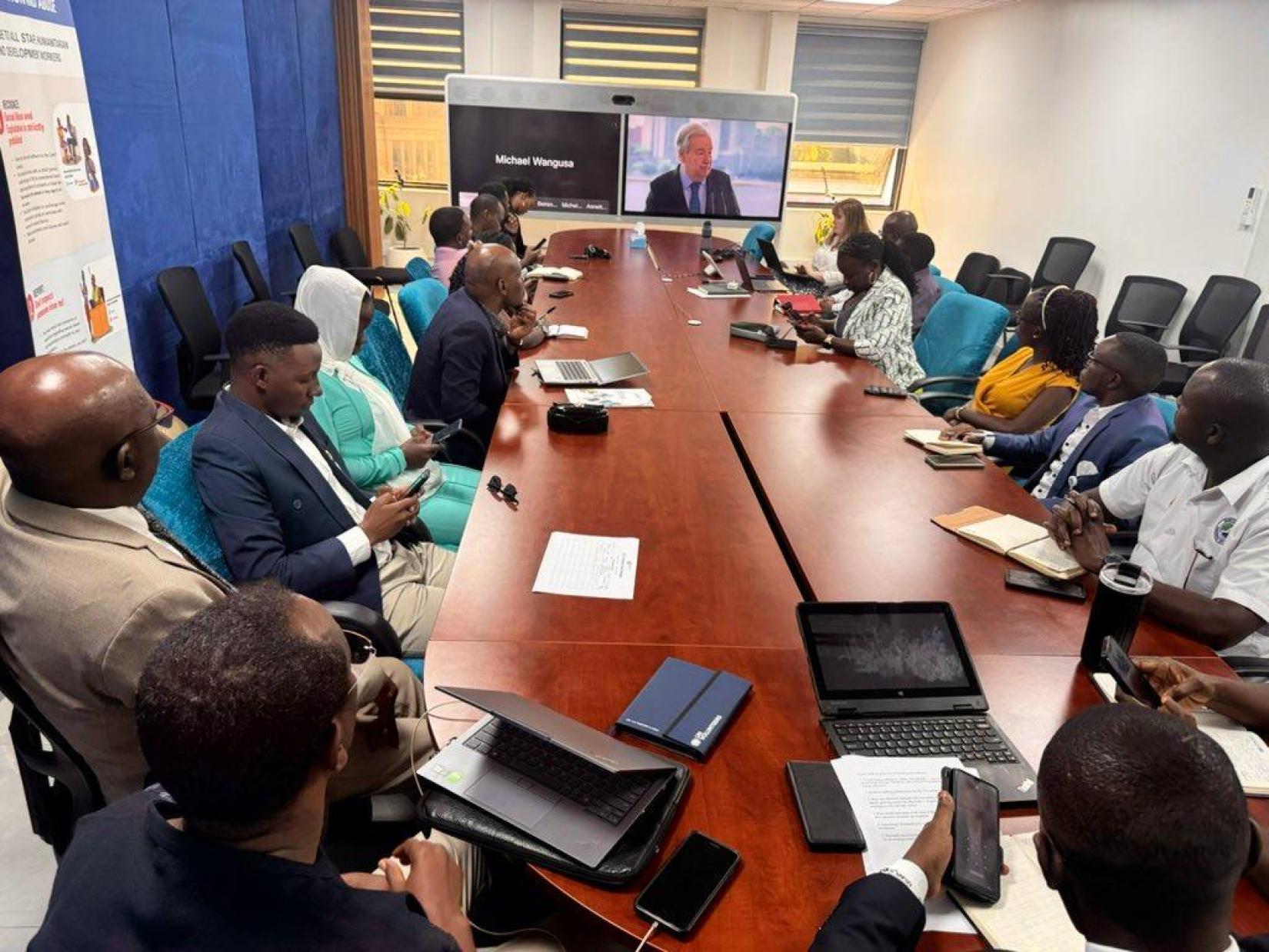
Caption: Ugandan Youth changemakers after the dialogue on the UN Secretary-General's landmark Address on “A Moment of Opportunity: Supercharging The Clean Energy Age” at the UN Resident Coordinator's Office in Kampala, 22 July 2025
Young changemakers discussed UN Secretary-General’s landmark speech - “A Moment of Opportunity: Supercharging The Clean Energy Age"
As the world hurtles toward a climate tipping point, Uganda’s youth are stepping onto the frontline of the energy transition, demanding bold action and offering fresh solutions. In a vibrant, youth-led dialogue hosted at the UN Resident Coordinator’s Office in Kampala, young changemakers voiced their hopes, concerns, and innovative ideas—energized by the launch of the UN Secretary-General’s new report: “Seizing the Moment of Opportunity” on 22 July 2025
The dialogue followed the global release of the UN Secretary-General António Guterres’ address, which calls on world leaders to end fossil fuel subsidies, triple renewable energy investments, and deliver a just and inclusive energy transition. His message was clear: the clean energy revolution is already underway, but it’s not moving fast enough—or fairly enough.
Caption: Ugandan Climate Activist Robert Turyakira moderating Youth Dialogue on the UN Secretary-General's landmark Address on “A Moment of Opportunity: Supercharging The Clean Energy Age” at the UN Resident Coordinator's Office in Kampala, 22 July 2025
“Fossil fuels are running out of road. The sun is rising on a clean energy age,” Guterres declared.
“This is not just a shift in power. It is a shift in possibility,” he added.
In this spirit, the Kampala dialogue brought together youth leaders and development actors to reflect on Uganda’s role in this global transformation. The discussion emphasized the need to accelerate implementation, especially as Africa still accounts for only 1.5% of global renewable energy capacity despite being home to 60% of the world’s best solar resources.
Uganda has made strides—adopting a progressive Climate Change Act and supporting renewable energy development—but challenges remain. Over 500 million people across Africa still lack electricity, and even within Uganda, energy access remains uneven. The transition must therefore be both green and just ensuring that no community is left behind.
“Access to electricity is not a luxury—it’s a precondition for participation in the future economy,” said Tom Sengalama, Head of Unit, Nature, Climate, Energy and Resilience at UNDP Uganda.
During the plenary, youth raised powerful points. They challenged the assumption that the transition must be linear, and instead advocated for context-specific strategies. Some called for using existing extractive resources, like oil and critical minerals, to responsibly fund a greener future—reflecting the geopolitical and financial complexities African countries face.
“Can we responsibly use what we have to build the clean future we want?” one young innovator asked.
“The billions pledged for climate action remain out of reach. Where can youth actually access these funds?” another participant added.
There was also a strong call to decentralize climate innovation—bringing resources and conversations beyond urban centers. Rural youth have ideas, participants argued, but are often excluded from funding and platforms.
“Communities must stop seeing climate change as someone else’s problem—it affects all of us,” a speaker urged, stressing the need for grassroots education and storytelling.
Caption: Ugandan Youth changemakers during the dialogue on the UN Secretary-General's landmark Address on “A Moment of Opportunity: Supercharging The Clean Energy Age” at the UN Resident Coordinator's Office in Kampala, 22 July 2025
Youth also highlighted barriers such as limited financing for youth-led energy startups, lack of data access, and exclusion from key decision-making forums. They called for targeted policies that support youth entrepreneurship in renewable energy, skills development, and technology transfer.
The dialogue underscored that Uganda’s transition must be not only green but also just and inclusive, ensuring that vulnerable populations—especially women, refugees, and rural communities—are not left behind.
The dialogue closed with an inspiring message to the youth: “Remain hopeful, stay engaged, and continue driving innovation” said Issa Conteh, Head of Office, UN Resident Coordinator’s Office. The UN in Uganda committed to sustaining this momentum through ongoing engagement platforms and creative partnerships that bridge policy, entrepreneurship, and community action.
Uganda’s energy transition will not be powered by technology alone—it will be driven by people. And young people are leading the way.