Statement at the National Partnership Forum on behalf of the Local Development Partners' Group
* The National Partnership Forum was convened by the Prime Minister and attended by Ministers, Ambassadors and Heads of UN Agencies
Right Honourable Prime Minister, Robinah Nabbanja
Honourable Ministers and State Ministers of the Republic of Uganda
Senior Government Officials here present,
Excellencies Ambassadors and Members of the Diplomatic Corps,
UN Heads of Agencies,
Distinguished ladies and gentlemen, esteemed colleagues,
I extend warm greetings to you all. It is my honor to speak on behalf of all development partners at this important National Partnership Forum for 2025 to discuss the future of Uganda outlined in the Fourth National Development Plan as well as the provision of sustainable international protection and assistance to refugees, and support to host communities.
Distinguished Ladies and Gentlemen,
-
Uganda has come a long way from essential nation rebuilding in the 1980s to today’s transformational socio-economic growth. From those early years of rebuilding, the leadership and the people have worked tirelessly to lay the foundation for the progress we see today. Institutions were strengthened, critical infrastructure was established, and investments in education and health have started bearing fruit. Uganda has shaped its direction through its long-term vision (Vision 2040), and national development plans, now on its fourth generation. It has aligned its priorities to regional and global goals. Indeed, it is very impressive that the national development priorities align with the Pact of the Future (the Global Digital Compact and the Declaration on Future Generations), including the 2030 Agenda for Sustainable Development, Africa Agenda 2063, East Africa Community Agenda 2050, the Global Compact on Refugees and the Global Compact on Migration. The country has concretely moved into a growth trajectory, embracing its uniqueness and participating actively on the global stage. Today, Uganda stands as a nation with bold ambitions, that seeks to transform its economy and bring prosperity to the lives of its people through strategic and inclusive development.
-
The National Partnership Forum is not just a meeting of development partners with the Government of Uganda; it is a crucial mechanism to align our collective efforts with the aspirations of the Fourth National Development Plan (NDP IV).
-
The NDP IV is a document of strategic national importance, it is a bold and inspiring agenda which contains the commitment by the Government of Uganda to accelerate the implementation of the sustainable development goals (SDGs). For development partners acceleration towards the achievement of the SDGs means focusing on high-impact areas like poverty eradication, food security through increased production and value addition, quality education for all, social protection, universal health coverage, access to affordable and sustainable energy, digitalization and reducing climate impacts. It also means a focus on transportation infrastructure, affordable financing for development, and good governance, including the respect of the human rights of everyone, everywhere in Uganda. This is what accelerated transformational change means.
-
The development partners take note that the NDP IV aims to help transform the economy- towards GDP growth to USD 500 billion by 2040- and lift household incomes across the nation. With its focus on Sustainable Industrialization for Inclusive Growth, Employment, and Wealth Creation, NDP IV aligns well with the SDGs and other regional aspirations. It is a call for action through strategic partnerships and complementarity. The primary drivers for the implementation of the plan are Ugandans and we are steadfast and ready to work in support of the people of Uganda.
-
The NDP IV comes with less than five years to the global targets for the SDGs in Agenda 2030, the much-anticipated expansion of key economic sectors, the start of revenue flows from mineral resources, and the harvesting of benefits from investments in infrastructure—such as roads, hydroelectric dams, and ICT. These represent the aspiration that Uganda will soon emerge as the hub for trade and innovation in the region. For transformational change, climate smart commercial agriculture at scale should also be a priority, as this is the game changer. As Uganda benefits from economic growth, we encourage continued investments in poverty reduction and inclusive development programmes, that will help to reduce inequalities.
-
The NDP IV also makes a firm commitment to human capital development. Recognizing the critical role of education, healthcare, and digital transformation in sustainable development. The vision of the Parish Development Model (PDM), to empower communities at the grassroots, is yet another bold step toward inclusive development — leaving no one behind. As we highlighted in the previous NPF, our development contributions are strongly aligned with the goals of the PDM.
-
With the growing economy and Uganda moving towards lower middle-income status, relations between Uganda and its international partners will also develop. Whereas in the past development cooperation was perhaps the mainstay, we now see a transition towards a relationship built on trade and investment. A growing economy will mean increased domestic resources mobilization, which will augment government resources and funding of Uganda’s development, meaning that the share of Official Direct Assistance (ODA) in Uganda’s development will gradually decrease.
-
While the achievements of the past decade are inspiring, the NDP IV opens the door to even greater opportunities. The next phase of Uganda’s development will depend on how we seize these opportunities: diversifying the economy beyond agriculture, extractive oil production to industry, manufacturing, services and tourism, leveraging climate action, renewable energy and the potential of Uganda’s youth, and taking full advantage of regional integration through platforms like the East Africa Community, COMESA and the African Continental Free Trade Area. The upcoming 11th African Regional Forum on Sustainable Development, 9-11 April in Kampala, will be a first opportunity.
-
This is also a moment for Uganda to lead the way in green growth. Uganda is leading by its use of hydropower as well as increasingly solar power, which means that almost all the electricity generated in Uganda is emission-free. By implementing Uganda’s ambitious NDC and delivering on the Government’s goal to achieve universal access to cleaner cooking and electricity by 2030, in line with the Paris Agreement on Climate Change, the country can continue to set an example for the region. The opportunities are immense.
-
However, as we reflect on these opportunities, we must remain keenly aware of the risks. The challenges of governance, human rights protection, gender inequality, rising debt, and youth unemployment must be addressed head-on. For example, the Inspector General of Government estimates that Uganda loses USD 2.7 Billion dollars through corruption. These obstacles can impede the transformative potential of the NDP IV. Moreover, peaceful, free, fair and credible elections will ultimately be the foundation for the success of the NDPIV.
-
We must also recognize that climate change is not a distant threat—it is a present reality. Protecting livelihoods, ensuring food security, and safeguarding the environment are integral to this plan’s success. The plan should aim to expand opportunities for women and girls as this will turbo charge development. To this end, we must double-up on efforts for full gender equality, including gender parity in leadership positions. And we must navigate global economic uncertainties with resilience and foresight to ensure that Uganda’s progress remains steadfast.
-
The NDP IV should be attuned to the realities articulated in the Pact for the Future which incorporates Our Common Agenda including the Framework for Future Generation. The Pact for the Future is a truly comprehensive framework that reinforces multilateralism and global cooperation to address current and emerging challenges. It can help Uganda navigate a fast-changing world and secure a better tomorrow for everyone.
-
Ultimately, the success of NDP IV will depend on strategic partnerships. Government, civil society, private sector, and development partners like the United Nations, Team Europe, African Union, International Financial Institutions and country to country bilateral partnerships working together to transform opportunities into tangible outcomes.
-
Let us commit ourselves to support Uganda towards this ambitious plan, knowing that by doing so, we are not just building a stronger Uganda — we are creating a place of opportunity for the region. It is crucial that we monitor its implementation and effectiveness. The Joint Results and Accountability Framework to which we are committed, will offer a valuable mechanism to track our collective progress. The revitalized National Partnership Forum is a platform to strengthen these relationships and make them even more impactful.
- As we look ahead, I am optimistic. Uganda’s vision is bold, and its people are resilient. Together, we can make this vision a reality. In the encouraging words of the UN Secretary-General, Antonio Guterres: “We live in a complex world. No government or nation can succeed alone. Partnership must be at the heart of our strategy.” Let’s act with purpose, unity, and urgency.
Thank you. Asante sana.


Speech by
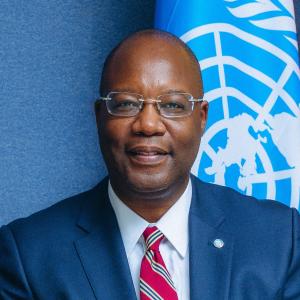
Leonard Zulu
Goals we are supporting through this initiative