Remarks at Trade Resilience Workshop for Uganda
*The workshop was facilitated by UNOHRLLS and the Ministry of Trade Industry and Cooperatives.
Salutations:
-
Distinguished Government Officials;
-
Representatives of Development Partner Organisations;
-
Representatives of Civil Society and the Private Sector;
-
Representatives of Academia and Research Institutions;
-
Colleagues from the United Nations System;
-
Ladies and Gentlemen.
Good morning
I am honoured to join you today at this important workshop on strengthening trade resilience in Uganda.
First, I would like to acknowledge the leadership of the Government of Uganda, in particular the Ministry of Trade, Industry and Cooperatives, in this critical discussion. But also, the presence of other government ministries, departments and agencies, regional bodies, private sector actors, development partners, civil society organisations, research organisations, among others. We are your partners in this journey, and we have assembled a dedicated team to support you throughout this process. Behind me stands the United Nations Country Team (UNCT) — a family of 29 agencies — ready to work alongside you and provide the necessary support.
Special thanks to United Nations Office of the High Representative for the Least Developed Countries, Landlocked Developing Countries and Small Island Developing States (UN-OHRLLS) for facilitating this dialogue at a crucial time for Uganda’s economic transformation.
Ladies and Gentlemen,
Trade plays a vital role in Uganda’s development, contributing to job creation, income generation, poverty reduction, and integration into regional and global value chains. In line with the 2030 Agenda for Sustainable Development, especially SDG 8 (decent work and economic growth) and SDG 9 (industry, innovation, and infrastructure), building a resilient trade system is central to Uganda’s national priorities.
Equally important, as Uganda met the criteria for Graduation from the United Nations LDCs category for the first time, resilient trade will be a crucial contributor and factor to maintaining this development trajectory and enabling a smooth transition for Uganda.
Uganda, like many developing economies, faces multiple shocks that affect trade. Some of these include:
-
Global supply chain disruptions;
-
Climate-related shocks (e.g., floods, droughts impacting agricultural exports);
-
Non-tariff barriers in regional trade;
-
Limited access to trade finance;
-
High transport and logistics costs.
These vulnerabilities were especially evident during the COVID-19 pandemic, and continue to persist amid geopolitical tensions, changing international development cooperation policies and climate volatility.
Trade resilience is not just about bouncing back, it's about bouncing forward and sustaining the gains, which requires bold actions in the following areas:
-
Diversifying export markets and products.
-
Strengthening regional integration, especially through the African Continental Free Trade Area (AfCFTA).
-
Investing in trade-related infrastructure (roads, digital systems, cold chains).
-
Promoting green and digital trade.
-
Enhancing the capacity of MSMEs and women-led businesses to participate in formal trade.
-
Fostering trade facilitation and customs reforms.
Dear Colleagues,
The United Nations system in Uganda, composed of resident and non-resident expertise, remains a committed partner in advancing inclusive, sustainable trade. Through agencies like UNCTAD, UNDP, UNDESA, ITC, UNECA, FAO and others, we are supporting the following:
-
Trade policy reforms
-
Capacity building for government and non-government institutions
-
Agricultural value chain development
-
Gender-responsive trade programs
-
Digitalization and e-commerce initiatives
Ladies and Gentlemen,
We remain committed to supporting Uganda and her sustainable development efforts based on national interests and in alignment with Uganda’s Fourth National Development Plan (NDPIV) and the UN Sustainable Development Cooperation Framework -both of which run until 2030. The Government’s plan commenced in July this year, while the new UN Cooperation Framework will begin in January 2026. We will continue to walk side by side with you throughout this journey.
Today’s workshop offers a platform to:
-
Share experiences, identify bottlenecks, and co-create solutions;
-
Strengthen partnerships across a cross-section of trade and development stakeholders including government, private sector, civil society and development partners. The private sector plays a particularly critical role in this journey, as it directly experiences and responds to the realities of trade.
-
Strengthen multi-stakeholder trade policy development, to ensure that trade policies are inclusive, adaptable and responsive to national, regional and global contexts.
I look forward to the insights from the discussions over these two days, as well as the concrete recommendations that will come out of these discussions.
The UN family stands ready to continue working with all of you towards a more prosperous and resilient Uganda.
I thank you for your attention, and look forward to our discussions.


Speech by
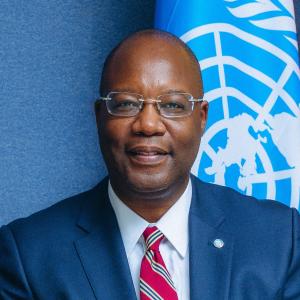
Leonard Zulu
Goals we are supporting through this initiative