Making Climate Finance a new Development Financing frontier

On 11 June 2025, the Uganda Policy Dialogue Series on Financing for Development (FfD4) were launched with the first dialogue on Climate Financing.
The dialogue brought together senior government officials, development partners, including the UN, civil society, and the private sector representatives.
The initiative is co-led by Uganda’s Office of the Prime Minister (OPM) and the United Nations Resident Coordinator's Office (RCO), together with the Ministry of Finance, Planning and Development (MoFPED), Ministry of Water and Environment (MWE), British High Commission, Embassies of Denmark, The Netherlands and Sweden, and European Union Delegation as co-conveners. The four dialogues leading up to the 4th International Conference on Financing for Development (FfD4) are on four key themes: Climate Financing, Domestic Resource Mobilization, Private Capital Mobilization, and the Funding Compact.
While strengthening Uganda’s preparation for the FfD4 Conference, the dialogue series aims to identifying key challenges and proposing actionable solutions for enhanced domestic resource mobilization, especially in the reduced external aid context. It will explore on innovative financing to support national development and align Uganda’s strategies with global financial reforms to foster resilience and sustainability. In addition, the dialogue series facilitates multi-stakeholder engagement through the National Partnership Forum (NPF), ensuring coordination among government, development partners, private sector, and civil society. The dialogue series thus also shapes the direction for Uganda’s national strategy on sustainable financing and sets the tone for its voice positioning for upcoming Social Summit in Doha and UNFCCC COP 30 in Belém, Brazil in November.

The first of a four-part series, was on Climate Financing, held under the theme "Enhancing the Mobilization and Effectiveness of Climate Financing in the Changing Landscape of Development Finance", saw strong participation of broad stakeholders, reflecting growing consensus that climate change is central to development and climate finance a new development financing frontier.
“We gather at a time of profound transformation in the global financing landscape; Official Development Assistance, though still vital, is no longer enough to meet the scale of today’s challenges,” said, the UN Resident Coordinator, Mr. Leonard Zulu. He added that climate finance presents an opportunity: to drive green growth, build resilience, and ensure that Uganda’s development pathway is inclusive and sustainable.
Participants stressed the gap in climate investment, especially for countries like Uganda. Danish Ambassador Signe Winding Albjerg remarked: “Climate change is one of the biggest challenges of our time. Uganda is among the least responsible yet bears the greatest burden.”
Recognizing the decline in international aid, including from USAID, the UK, Germany, and the Netherlands, the participants in the meeting underscored the urgency to mobilize new, sustainable financing sources, especially domestically. “Without climate financing, we cannot have development,” said Margaret Mwebesa, the Commissioner for Climate Change. The Dialogue underlined that Climate Financing is not optional that it is foundational to sustainable development, and thus must be recognized and defined as a key, inseparable pillar of Financing for Development.
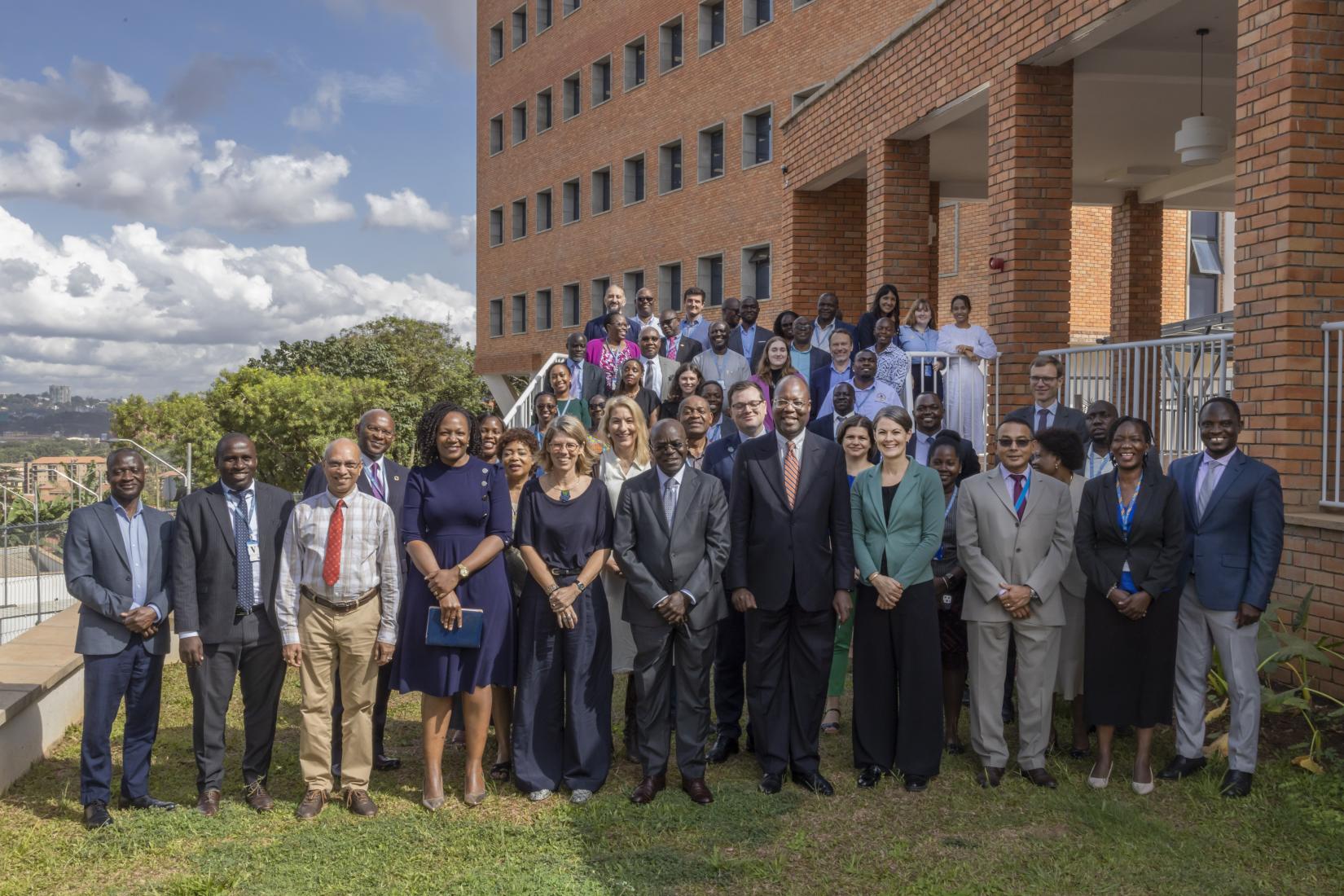
Denmark and European Union Delegation, co-conveners of the Climate Financing dialogue, pledged to improving access to finance for the private sector in forestry, including through carbon credits. Civil society members called for de-risking climate financing through an increased reliance on national resources and for stronger community engagement; while UN Champions for the FfD4 dialogue series, including IFAD, IOM and UNDP and private sector representatives pledged to raise awareness on available climate financing instruments.


Written by

UN entities involved in this initiative
Goals we are supporting through this initiative