Spotlight Initiative in Yumbe: Progress, Partnerships, and Commitments to Gender Equality

The Joint Programme reported steady progress toward reaching 3 million beneficiaries
The Spotlight Initiative undertook a field mission to Yumbe District 19-20 November 2025, engaging district leadership, meeting programme beneficiaries, and concluding with the 4th Oversight Steering Committee Meeting. The visit provided an opportunity to assess progress on preventing and responding to violence against women and girls (VAWG), while strengthening partnerships with government, development partners, and communities.
Engagement with Yumbe District Leadership
During a meeting with the Yumbe District Office, leaders highlighted both achievements and ongoing challenges. The district reported significant progress in child health, surpassing its target for Financial Year 2024-2025 for the second dose of Vitamin A, achieving 109 per cent against a target of 60 per cent. However, key concerns remain, including low modern contraceptive uptake, maternal health challenges, a shortage of health workers, and transport barriers affecting access to care.
Of the district’s 586,072 school-age population, 30.5 per cent are refugees. While completion rates have improved slightly, dropout remains high at 89 per cent among girls and 84 per cent among boys. Leaders also noted disparities in Water, Sanitation and Hygiene (WASH) access: safe water coverage stands at 48 per cent (below the national standard of 68 per cent), and handwashing with soap remains low at 6.8 per cent due to inadequate facilities.
The district highlighted several government-led programmes, Universal Primary Education (UPE), Universal Secondary Education (USE), the Parish Development Model (PDM), Youth Livelihood Programme (YLP), and the Uganda Women Entrepreneurship Programme (UWEP), as key pillars supporting community resilience. District leaders called for greater local ownership in planning and sustainability, a stronger multisectoral approach to teenage pregnancy, and expanded youth skilling.
Meeting the Beneficiaries
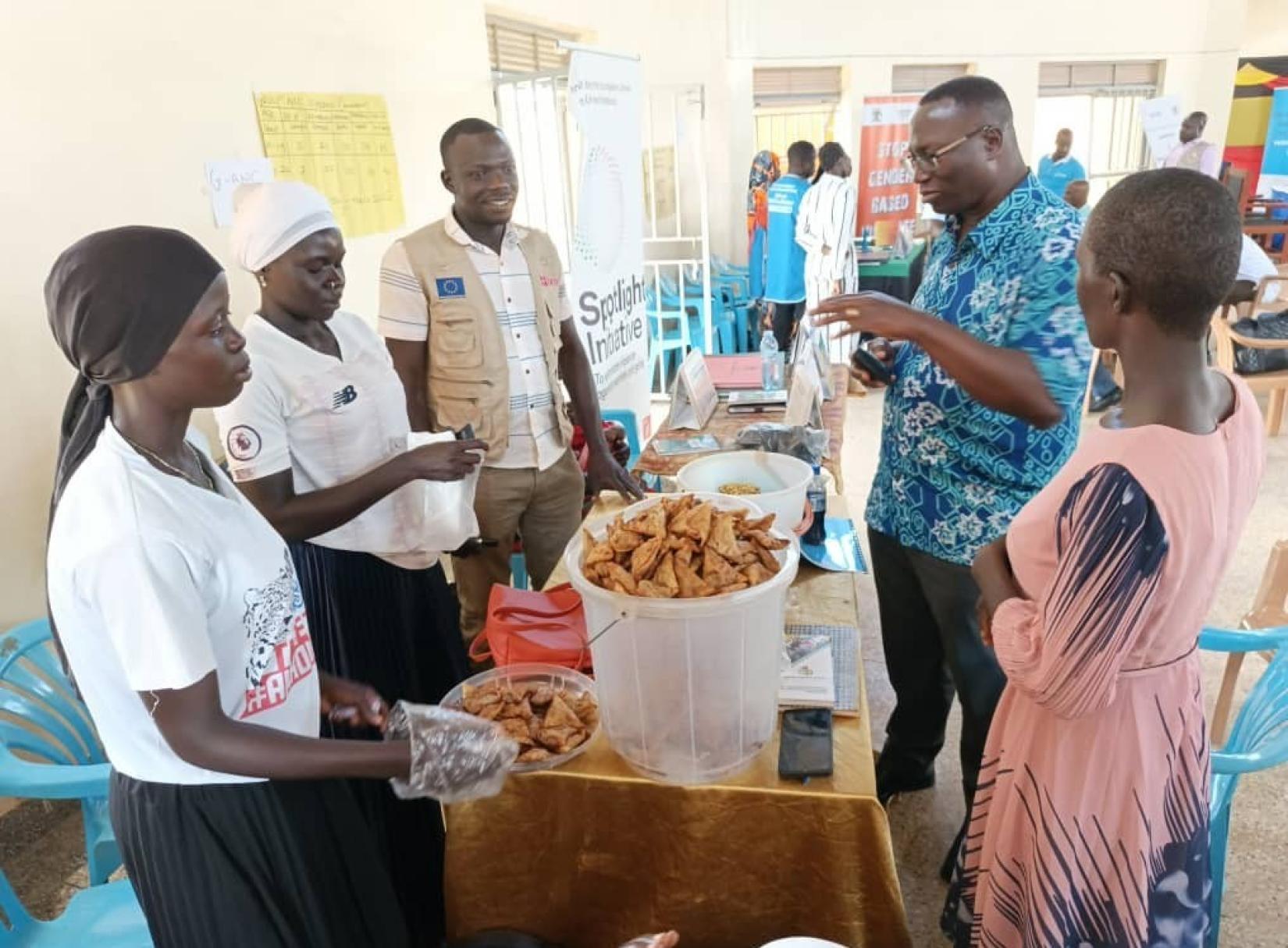
The delegation also met Spotlight beneficiaries, who shared first-hand stories of how the programme has improved their access to services, and economic opportunities. Reflecting on these interactions, Ms. Elin Hilwig, of the Royal Netherlands Embassy noted: “Hearing directly from beneficiaries about how Spotlight has transformed their lives truly makes a difference. The urgency of advancing gender equality and the rights of women and girls is clearer than ever.”
4th Oversight Steering Committee Meeting
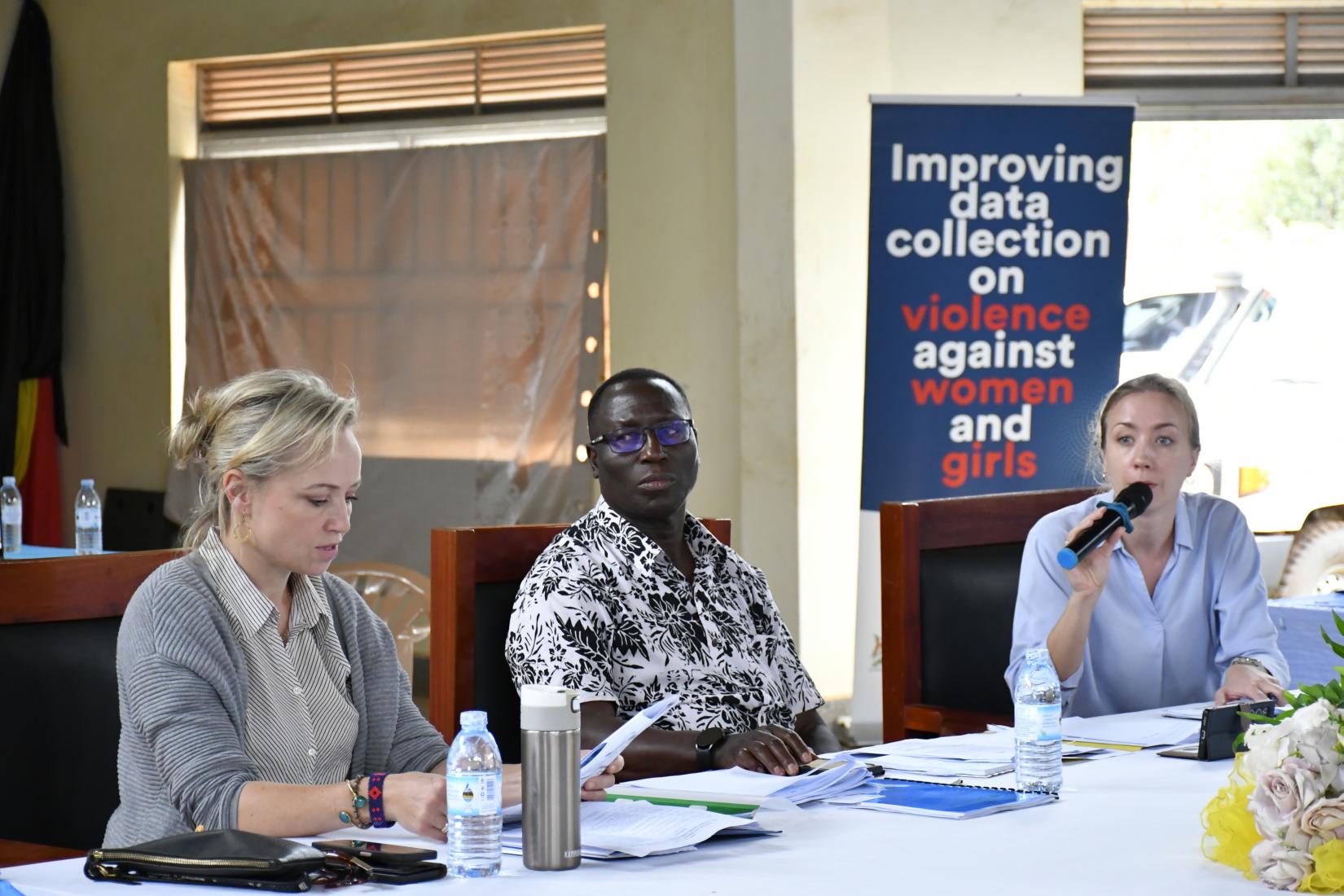
The mission concluded with the 4th Oversight Steering Committee Meeting, bringing together government representatives, UN agencies, development partners, civil society, and community actors to review mid-year progress under Spotlight Initiative 2.0.
UN Resident Coordinator Mr. Leonard Zulu reaffirmed that, despite declining development assistance, the programme continues delivering impact through strong local partnerships, particularly the EU Delegation and the Royal Netherlands Embassy. He emphasized the Initiative’s alignment with the Uganda UN Sustainable Development Cooperation Framework 2026–2030 and Uganda’s Fourth National Development Plan (NDP IV), underscoring the UN’s commitment to Delivering as One and Leaving No One Behind.
The Permanent Secretary of the Ministry of Gender, Labour and Social Development, Mr. Aggrey Kibenge, reiterated government commitment to ending Violence Against Women and Girls (VAWG), child marriage, teenage pregnancy, and Female Genital Mutilation (FGM). He stressed the need for mindset change, deeper parental involvement, and strengthened institutional frameworks to safeguard the rights of women and girls.
Representing the EU Delegation, Ms. Karolina Andrzejewska reaffirmed the EU’s steadfast commitment to women’s rights and gender equality. She shared that the EU is finalising another allocation under the Annual Action Plan 2026 of 40 billion euros for social inclusion, women’s economic empowerment, Sexual Gender Based Violence (SGBV) prevention, and access to Sexual and Reproductive Health and Rights (SRHR). “This new funding will build on the foundations laid by Spotlight 1.0 and 2.0 and deepen our impact in these critical areas,” she noted. She also underscored that Spotlight remains part of the EU’s major gender commitments, with a total Gender for Development Uganda (G4DU) allocation of 85 million euros.
Progress and Remaining Gaps
The Joint Programme reported steady progress toward reaching 3 million beneficiaries. Key achievements include expansion to five new districts (Adjumani, Nebbi, Madi-Okollo, Lamwo and Oyam), improved youth access to SRHR services with 34,609 young people reached, 338 adolescents returned-to-school, and mental health support capacity was strengthened through Mental Health and Psychosocial Support (MHPSS) modules.
However, persistent challenges remain such as: harmful social norms, refugee vulnerabilities (access to services, language barriers, high school dropouts), limited disability inclusion, and restricted economic opportunities for women, refugees, and persons with disabilities.
Way Forward
The mission underscored the importance of multi-sectoral, community-driven efforts that directly address harmful gender norms, strengthen access to justice, expand economic empowerment, and enhance mental health and psychosocial support. Partners also emphasized improved data systems, calling for a national digital platform to strengthen transparency and beneficiary tracking.
Across meetings with district leaders, communities, and the Steering Committee, a shared message emerged: ensuring that women, girls, refugees, and persons with disabilities can fully enjoy their rights is essential for building safe and inclusive communities. Sustaining this progress requires ongoing commitment, robust systems, and collective action.


Written by

UN entities involved in this initiative
Goals we are supporting through this initiative