Remarks at Technical Workshop on Durable Solutions for Refugees
*The workshop identified the main opportunities and barriers, and agreed on actions to accelerate durable solutions for refugees in Uganda
Salutations:
- Distinguished representatives of the Government of Uganda,
- Senior Officials and Colleagues from the Office of the Prime Minister and the CRRF Secretariat,
- Representatives of UN agencies, development and humanitarian partners,
- Representatives of refugee and host communities,
- Ladies and Gentlemen,
I am happy to be here to talk about the refugee response in Uganda. This is very important for United Nations Country Team. I thank the people of Uganda, as first responders in receiving refugees, for being such wonderful hosts. Last week I was in the communities to appreciate the work they do before the Government of Uganda takes over.
It is a pleasure to welcome you to this Technical Workshop on Durable Solutions for Refugees in Uganda.
Let me begin by thanking the Government of Uganda, through the Office of the Prime Minister and the CRRF Secretariat, UNHCR and the whole UN family in Uganda for convening this important discussion, and all partners who have contributed to its organisation and will be sharing their experiences and expertise over the next two days.
This workshop provides a valuable opportunity to take stock of progress, exchange experiences, identify good practices and challenges, and reflect together on how we can continue to support efforts towards durable solutions in Uganda.
Uganda has considerable experience in refugee protection, inclusion and self-reliance, with a number of initiatives and partnerships from which we can learn. At the same time, different refugee populations and contexts require different approaches. Continued dialogue and collaboration are therefore essential to identify what can work, where further efforts may be needed, and how we can build on existing initiatives.
The objective of these two days is therefore very practical: to strengthen our common understanding, share experiences, identify remaining challenges, and consider together opportunities to further advance durable solutions.
Today, we will look at the different pathways towards durable solutions, including voluntary repatriation, resettlement and complementary pathways, as well as local integration, self-reliance and socio-economic inclusion. We will also explore some of the practical areas that can help strengthen an enabling environment for solutions, including registration and documentation, livelihoods, skills and employment, financial inclusion, and engagement with development and other partners. Particular attention should be given to addressing barriers that prevent those at risk of exclusion, including youth, older persons and persons with disabilities, from accessing these opportunities on an equal basis.
These areas are closely interconnected. Access to documentation and legal status, services, livelihoods and socio-economic opportunities can contribute both to protection and to people's ability to pursue longer-term solutions. When those most at risk of exclusion can safely access these opportunities, families thrive, communities become more resilient, and durable solutions become more sustainable.
Across the different pathways, it is important that solutions are pursued in a manner that respects voluntariness, informed choice and dignity, with the rights and perspectives of refugees appropriately reflected in our planning.
International responsibility-sharing remains of critical importance. Expanding the range of solutions available to refugees in Uganda cannot rest on Uganda alone. It’s a common effort, an international good. It requires sustained engagement from countries of origin, countries hosting refugees, resettlement and complementary pathway countries, donors, development partners and the wider international community – including the International Financial Institutions.
The UN Country Team remains committed to supporting the Government of Uganda in advancing a comprehensive and rights-based approach to durable solutions, including by supporting coordination across key actors and humanitarian, development and peace dimensions of solutions. The UN Country Team committed, through the 2023 Common Pledge for Uganda, to support the Government towards durable solutions, including by addressing the root causes and drivers of displacement through strengthened humanitarian-development-peace approaches and regional dialogue. This provides an important framework for our collective engagement.
Over the next two days, we have an opportunity to move from a broad understanding of durable solutions towards identifying what needs to happen on the ground, who needs to act, and what support is required. We also see this workshop as an opportunity to listen and learn. The experience and perspectives of Government, refugee and host communities, development and humanitarian partners, the private sector and other stakeholders are all important to understanding both the opportunities and the practical challenges involved.
I would encourage everyone to use these two days as an open space for practical exchange and collaboration – to share experiences, raise challenges, identify opportunities and, where possible, build on initiatives that are already showing promise. I think the attitude here should be “can do”, lots of protection people around. I hope you will think out of the box, do not be risk averse and accompany refugees to go forward and attain appropriate durable solutions for them. Do not be timid, be brave.
The discussions and recommendations emerging from this technical workshop will provide useful inputs for the upcoming high-level engagement. I hope, therefore, that by the end of these two days we will have not only a clearer shared understanding of the opportunities and challenges, but also a set of practical ideas and priorities that can help guide our continued work together.
Let us use these two days to be ambitious in our vision, but also concrete and realistic in identifying the actions that can take us forward, for solutions that are truly sustainable, inclusive, and able to contribute to Uganda’s development journey and to the hope that refugees have that they will find durable solutions that apply. I am confident that the breadth of expertise represented in this room provides a strong basis for this discussion.
We should aim to walk out of this room with five or six practical, actionable recommendations, we can start implementing immediately. We have 2 million people we need to immediately start thinking how they can end their needs for humanitarian assistance, in the framework of the conventions. We should start finding ways to make voluntary repatriation possible, and resettlement where possible. We need to look at the opportunities within the region and COMESA, from the countries most of the refugees originate.
I wish you all a productive and constructive workshop, and I look forward to the recommendations that will emerge from our discussions.
Thank you very much.


Speech by
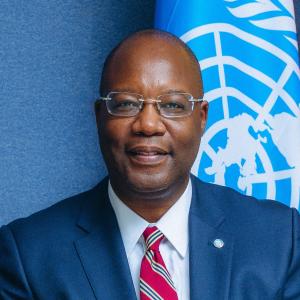
Leonard Zulu
Goals we are supporting through this initiative