Story
16 September 2025
Adapting to Shifting Global Priorities in Development Finance
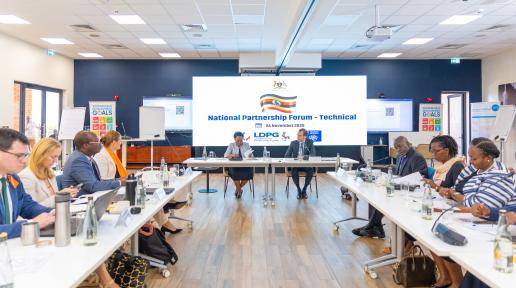
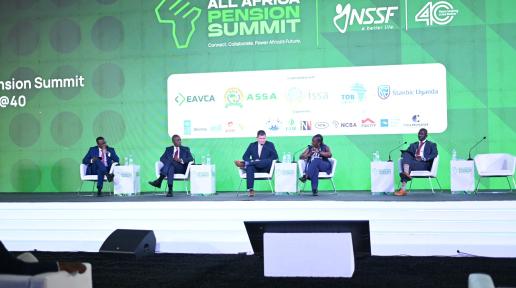
On 16 September 2025, Stanbic Bank Uganda held their fifth Development Partner Organisation (DPOs) Round Table, under the theme ‘Adapting to shifting global priorities in development finance’. Speakers highlighted the turbulence shaping development finance today declining aid flows, shifting geopolitical priorities, and funding uncertainties. Yet amid this turbulence, one message stood firm: Stanbic Bank and its partners remain committed to driving Uganda’s growth through resilience, innovation, and co-creation.From the outset, Stanbic leaders underscored their dual role as both a commercial and development bank, committed to building enterprises, supporting farmers, and nurturing entrepreneurship. Through initiatives such as the Stanbic Incubator, the Savings and Credit Cooperative Organisations (SACCOs) Programme reaching over 800 farmer groups, and the National Schools Programme fostering youth entrepreneurship, the bank has shown that development can be achieved through practical, scalable, and inclusive interventions. Looking ahead, Stanbic pledged that by 2028, UGX 1 trillion will be directed toward women, youth, and farmers, but emphasized that this cannot be achieved alone. Co-created, scalable programmes remain essential. Speakers from across the development ecosystem echoed this call. Paula Coetzee from Stanbic noted that while donor flows are changing, transparency, real-time reporting, and strategic partnerships can safeguard impact. William W. Popp, US Ambassador to Uganda, stressed the importance of mutual prosperity, trade, and private investment, noting Uganda, as one of Africa’s fastest-growing economies. He reminded the audience that by 2050 Africa will be home to one-quarter of the world’s population, over 2.5 billion people. He emphasized the need to open doors, reduce barriers, and lower investment risks so Uganda can fully harness its commercial potential.The United Nations Resident Coordinator, Leonard Zulu, urged Africa to look inward, mobilizing domestic savings, diaspora remittances, and blended finance models to reduce aid dependency. He noted that 15 of the 20 traditional donor partners had reduced their funding, forcing a rethink of how development is financed. He called for a shift “from aid to trade,” enabling small and medium sized enterprises (SMEs) to access capital markets and banks, and required to realize the goal of Uganda’s fourth National Development Plan - NDP IV (2025–2030) which aims for tenfold growth—expanding from a US$50 billion economy today to US$500 billion by 2040.From government, Richard Ssewakiryanga of the Office of the Prime Minister reminded participants that development finance is no longer a luxury—every resource must count. He laid out the stark figures: in 2024, official development assistance (ODA) amounted to US$212.1 billion, yet the global financing gap for achieving the Sustainable Development Goals (SDGs) stands at US$4.2 trillion. His call to action was clear: mobilize time, talent, and treasure, embrace solidarity, and seize opportunities—because, as he reminded, “opportunity only knocks once.” The round table closed with a collective call to action: while global development finance priorities may be shifting, Uganda’s opportunity lies in reimagining partnerships and moving from aid dependency to sustainable growth.This means:Adopting blended financing models that leverage public, private, and philanthropic capital.Strengthening domestic resource mobilization and tapping into Africa’s vast savings and diaspora remittances.Scaling inclusive programmes that prioritize women, youth, and farmers—the backbone of Uganda’s economy.Embedding resilience in communities, ensuring development finance reaches those most affected by crises, such as climate change, people living in refugee settlements, and health related risksBuilding ecosystems of trust and accountability where dialogue shapes innovation and partnerships create lasting impact.As Damoni Kitabire of Stanbic summarized, “Partnerships are not a choice—they are a necessity. Together, let us adopt, innovate, and build a future where Uganda thrives beyond aid.”The 2025 DPOs Round Table reaffirmed that even in times of turbulence, adaptability, collaboration, and shared purpose can turn shifting global priorities into opportunities for Uganda’s sustainable development.